
When we started looking around our new home, we were incredibly lucky to discover an essay written by the previous owners. It offered a wonderful glimpse into the story of the land long before we arrived, and reading it felt a little like uncovering the past secrets of the house.
Originally, the plot formed part of a woodland. The land belonged to a local landowner, and by around 1900 a long strip, roughly half a mile in length and about 40 metres deep had been cleared and turned into cultivated farmland.
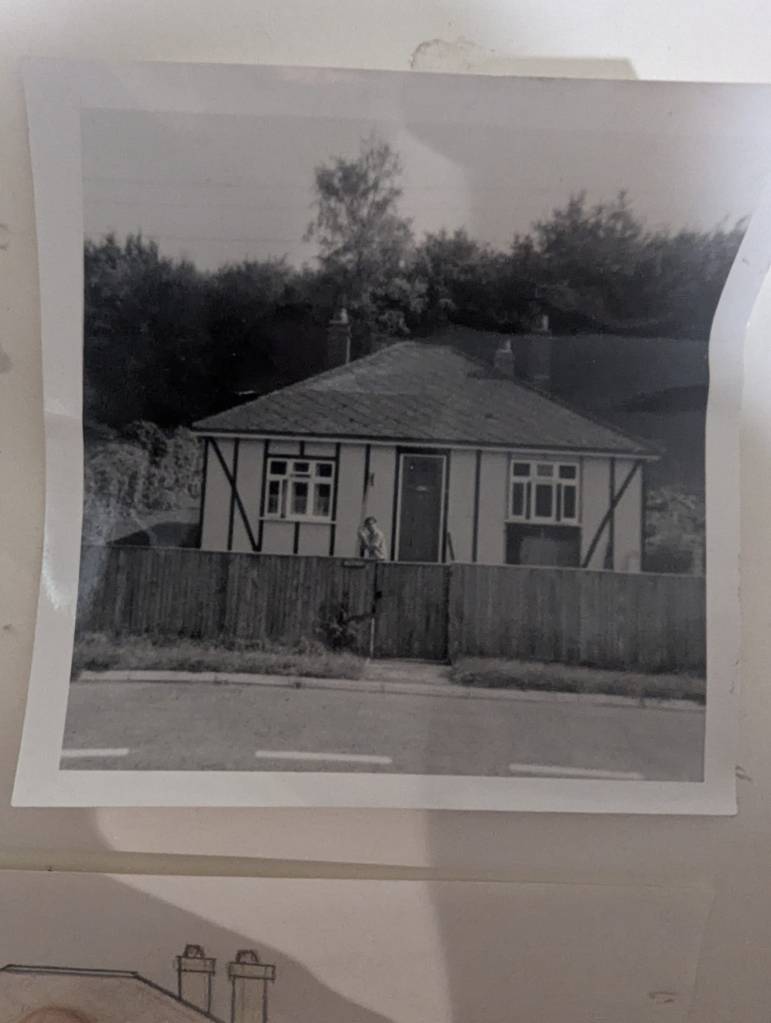
In 1917 the strip of land was purchased by a new owner, who kept it as cultivated farm land and later sold most of it in 1925. Over the following years the land slowly began to change. By around 1930, one bungalow had been built along the strip and its owner moved in. Shortly afterwards, construction began on a second bungalow, the one that would eventually become our home.
The bungalow was purchased in 1933 for the grand sum of £240. At that time, the woodland behind the property was still separate and it wasn’t until 1975 that the half-acre of woodland at the rear was added to the property. The owner who grew up here spent nearly their entire life in the house, living here from birth until the remarkable age of 90.
Nearly a century after the bungalow was first built, we became the next caretakers of the property when we purchased it in 2025.
Life Before Modern Services
Many of the modern conveniences we take for granted today arrived surprisingly late at the bungalow.
Until around 1950, drinking water was collected from the roof and stored in an underground tank. From there it was pumped up into the kitchen using a suction pump. The property isn’t connected to the mains drainage system, even today, so we have the luxury of having a cesspit in the corner of the garden!
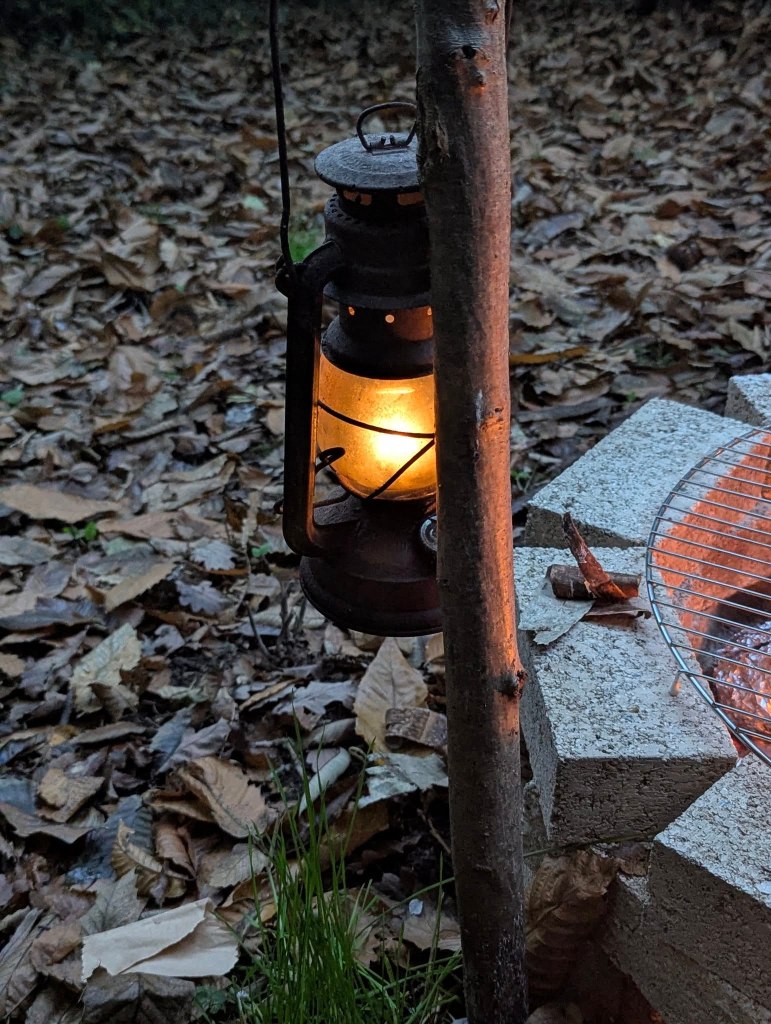
Electricity did not reach the bungalow until 1955. Before then, lighting was provided by paraffin lamps, and some cooking and heating was also done using paraffin. We did actually find a paraffin lamp in the garage that the previous owners left.
Even today, one other thing still hasn’t changed, there is no mains gas supply to the bungalow.
A Curious Location
The bungalow sits along a busy main A-Road and occupies a rather unusual position administratively. The property actually straddles multiple council boundaries, meaning it sits right on the boundary of a parish council as well as two separate main councils. Interestingly, the neighbouring property sits within a completely different council district.
Along this stretch of road there are five bungalows spread across roughly 300 metres, each with its own small piece of the original strip of land.
The Original Bungalow
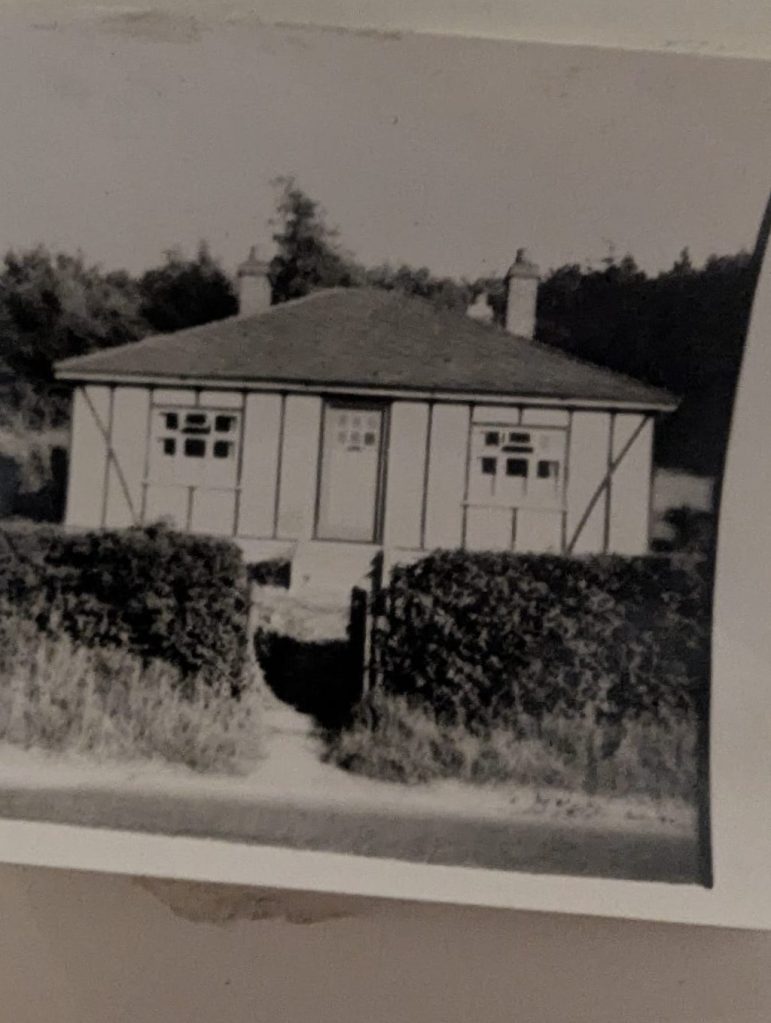
The original bungalow was modest in size, measuring roughly 7 metres by 9 metres. It was built with a timber frame and clad in asbestos cement sheeting, topped with a hipped roof covered in asbestos tiles and three chimney stacks.
Inside there were six rooms:
- Kitchen
- Living room
- Sitting room
- Two bedrooms
- Bathroom
Life in the house looked very different then. The kitchen contained a copper used for boiling washing, while the living room housed a cooking range. The sitting room and both bedrooms were fitted with fireplates for heating.
Around 1940 the copper was removed, and in 1953 the original kitchen range was replaced with a Rayburn cooker.
The First Alteration (1970)
In 1970 the bungalow underwent its first major transformation.
The building was extended by almost three metres, and the internal layout was reorganised. This created an additional bedroom, slightly enlarged the sitting room, and meant that the bathroom no longer had to be accessed through the kitchen, a welcome improvement.
The front door was also moved to the end of the building. At the same time, the outer walls were rebuilt using sand-coloured Fletton bricks, and the roof was replaced with dark brown concrete tiles.
Outside, the small timber-framed garage was replaced with a prefabricated concrete garage with asbestos roof tiles.
The Second Alteration (1981)
A second extension followed in 1981, when the bungalow was extended 1.5 metres to the rear. This allowed all of the back rooms to be enlarged.
The outbuilding behind the property was also rebuilt using a cavity wall construction, and a WC was added.
During this renovation the Rayburn cooker was removed and replaced with a gravity-fed oil central heating boiler. From that point on, cooking in the house was done entirely using electricity.
 Squirrel Woods